 SJHYPS
Why Indian Indie Games Deserve More Attention in 2025
Small studios across India are building original games that challenge what the industry expects from the region. Here's what's actually happening on the ground.

We find small studios and solo developers in India who are building original, thoughtful games — no reskins, no gambling mechanics, no pay-to-win traps. If you want honest takes on creative indie titles, this is the place.
See what we coverOperated by Patricia Ramirez, Mumbai, Maharashtra, India. Privacy Policy
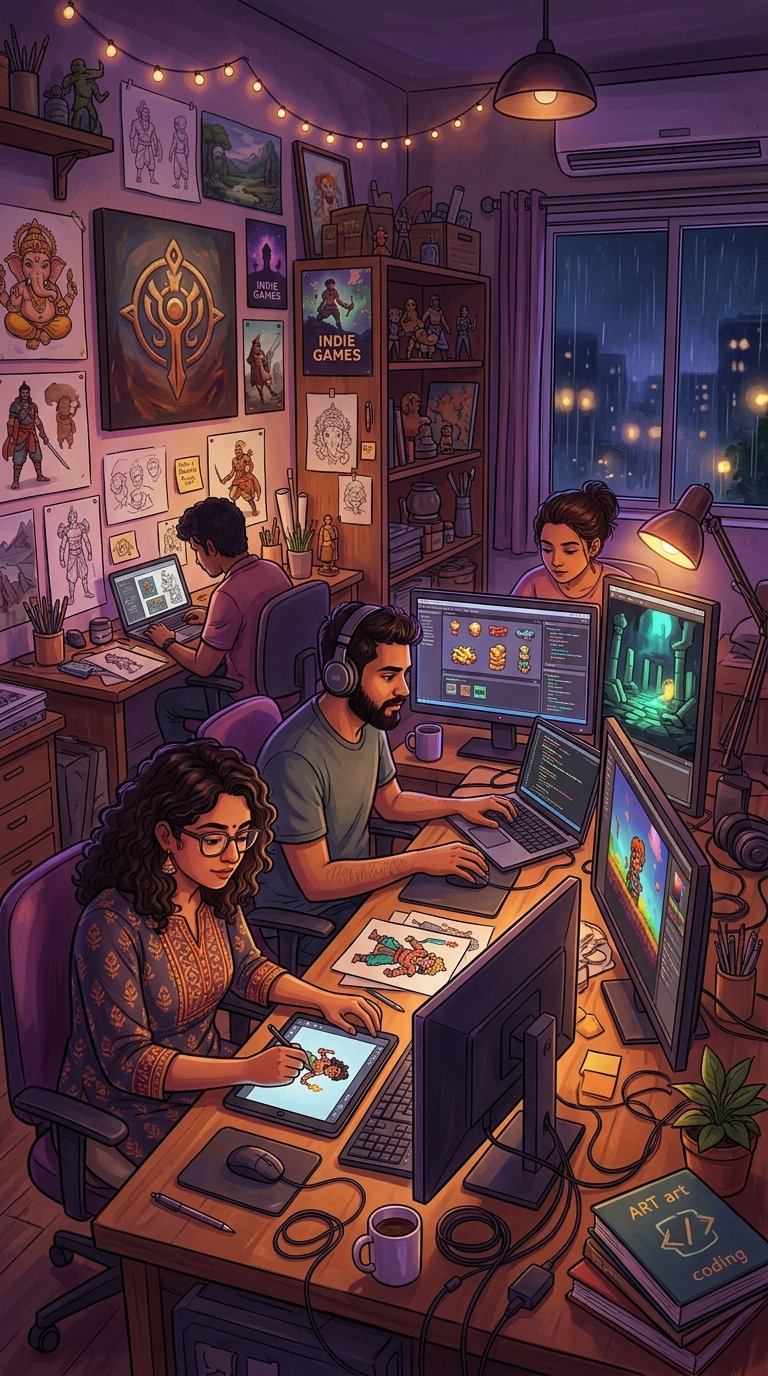
A growing number of small teams across India are choosing to build original games instead of cloning proven formulas.
Back in 2019, I stumbled on a 2D puzzle game made by a two-person team in Pune. It was rough around the edges, honestly. The controls were stiff, the UI looked like it was drawn in Paint, but the level design had this quiet cleverness that I hadn't seen in any of the big-budget titles I was playing at the time. That discovery changed how I think about games coming out of India. It's not just about the AAA studios or the hypercasual clones flooding the app stores. There is an entire layer of developers — some working from bedrooms in Hyderabad, others from shared coworking desks in Bangalore — who are building games with genuine creative ambition.
The problem I kept running into was finding them. Most indie games from Indian developers don't get coverage from major outlets. They don't have marketing budgets. Some don't even have proper trailers. The only way to find them is to dig through itch.io pages, follow obscure Discord channels, or talk to people at local game jams. That is basically what SJHYPS tries to do — surface these projects and give them a fair look.
Since starting this project, I've catalogued over 40 indie titles from developers across 12 Indian cities. The genres range from narrative adventures to experimental puzzle games. A few have gone on to release on Steam. Others remain as prototypes. But each one tells you something about what's actually happening in the Indian game development scene beyond the headlines.
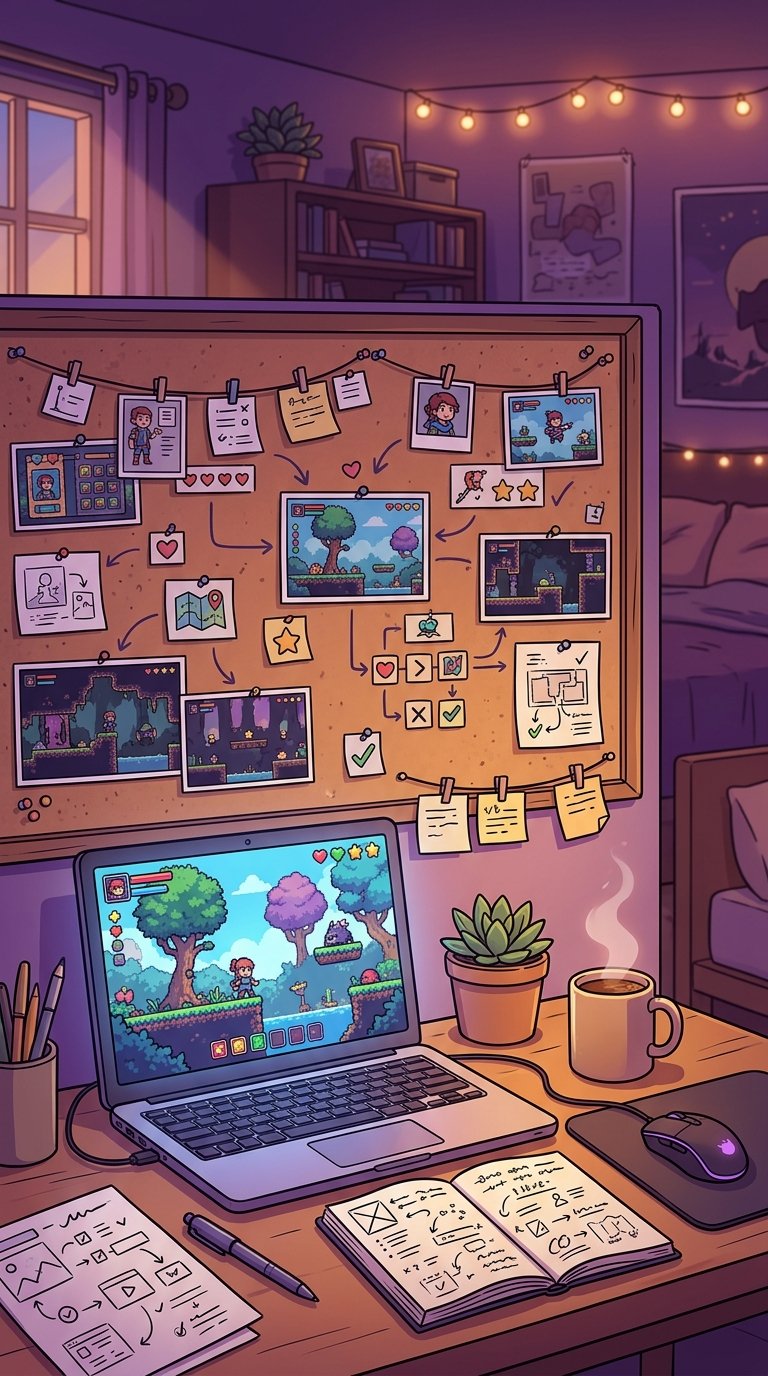
Each game gets the same treatment — play it, document it, write about what works and what doesn't.
Every game that gets featured here goes through the same basic process. I play it for at least three hours, or until completion if it's shorter. I take notes on the core loop, the art direction, the sound design, and anything that feels like a deliberate creative choice rather than a default asset pack.
I write about what the game is trying to do, whether it pulls it off, and who might actually enjoy it. I'm not interested in assigning scores or ranking games against each other. A 20-minute experimental game about grief and a 40-hour RPG are doing completely different things, and comparing them numerically doesn't help anyone decide what to play.
When I write something negative, I try to be specific. "The combat feels bad" doesn't tell a developer anything useful. "The attack animation doesn't cancel on dodge, which makes the first three encounters frustrating" — that's actionable. Several developers have told me they found the writeups here more useful than the two-line reviews they got elsewhere, and that's the bar I'm trying to maintain.
One more thing: I don't accept payment to feature games. If a developer sends me a key, I'll play it, but there's no guarantee of coverage. I write about what genuinely interests me or where I think there's something worth discussing.
Featured project: A narrative adventure exploring folk traditions in rural Maharashtra.
Solo-built puzzle game using hand-drawn art and original soundtracks.
Experimental asynchronous multiplayer prototype from a Bangalore-based team.
Editorial Note
This site is run by one person. I write everything myself, play every game I cover, and update articles when developers release significant patches. The most recent site update was in June 2026. If you spot an error or outdated information, email me directly at patricia.ramirez194@hotmail.com and I'll fix it within a week.
Small studios across India are building original games that challenge what the industry expects from the region. Here's what's actually happening on the ground.
What to expect, how to prepare, and which jams actually lead to finished games.

How indie developers in India create distinctive visual styles without hiring full art teams.
No. We do not review, promote, or link to any games involving real-money gaming, betting, or gambling of any kind. Our focus is exclusively on creative and independent games with original artistic or gameplay value.
You can send details through the contact page. Include a playable build (Steam key, itch.io link, or APK). I play everything that comes in, but I only write about games that genuinely interest me. There is no paid placement or guaranteed coverage.
I aim to publish at least one new article or game feature per month. Existing articles get updated when developers release major patches or when I discover new information. The last site-wide update was June 2026.
No. This is a personal project run by me, Patricia Ramirez, independently from my work at Digital Wave. I have no financial ties to any of the studios or developers whose games I cover. See our disclaimer for full details.
For our purposes, a game qualifies as indie if it is developed by a small team (typically under 15 people) without major publisher funding. The key criterion is creative independence — the developers make their own design and artistic decisions. We look at the team size, funding source, and creative control rather than applying a strict definition.
It varies. I need at least two weeks to play through a game properly and write something thoughtful. During busy periods, it can take longer. If you haven't heard back within six weeks, it likely means I didn't find enough material for a writeup, but you're welcome to reach out again for future projects.